


Phone No.
(780) 450-3957
Ready-to-eat foods present unique food safety and quality challenges because they are often consumed without additional cooking.
For manufacturers, this means microbiological controls, environmental monitoring programs, and shelf-life validation activities play a critical role in product safety and quality.
PBR Laboratories provides food pathogen testing, food microbiology testing, environmental monitoring, and shelf-life testing services for ready-to-eat food manufacturers throughout Alberta, Western Canada, and Canada.
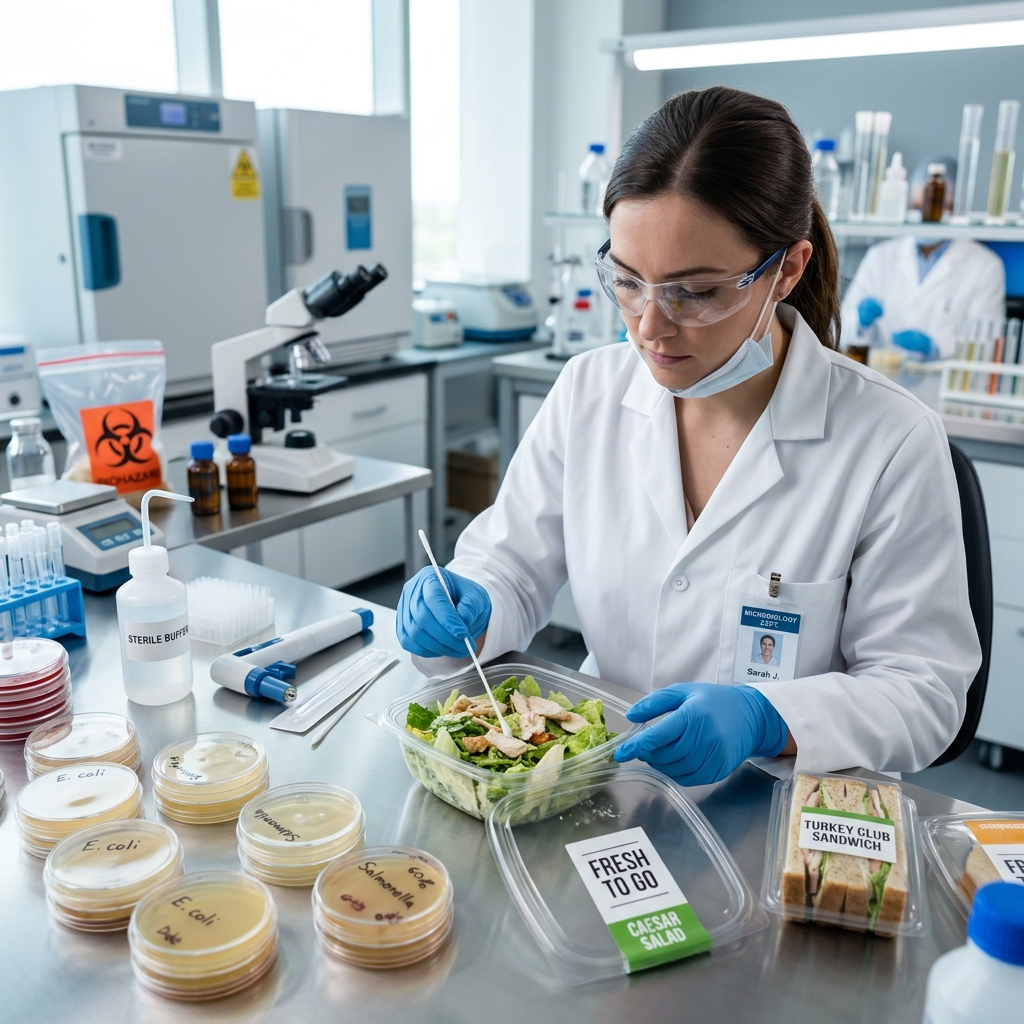
Whether producing:
Unlike products that receive further cooking, ready-to-eat foods depend heavily on:
Testing helps manufacturers identify risks before products reach customers.
Food pathogen testing is often a critical component of ready-to-eat food verification programs.
Common testing includes:
One of the most important pathogens monitored in ready-to-eat food production environments.
Often included in food safety verification programs.
Frequently evaluated in prepared foods, rice products, and ready-to-eat meals. Learn more: Bacillus cereus in Ready-to-Eat Foods.
Often included in cooling verification and process validation activities. Learn more: Cooling Failures and Clostridium perfringens.
May be included based on product risk and ingredients.
Routine microbiology testing helps evaluate product quality and process consistency.
Common testing includes:
Environmental monitoring is one of the most important food safety tools for ready-to-eat food manufacturers.
Shelf-life studies help manufacturers evaluate:
Testing may include:
If pathogen or microbiology results indicate a concern:
Laboratory testing is most valuable when it supports informed action.
Ready-to-eat foods may be consumed without additional cooking, making Listeria monocytogenes monitoring an important component of food safety programs.
Common testing may include Listeria monocytogenes, Salmonella spp., Bacillus cereus, Clostridium perfringens, and Escherichia coli (E. coli) O157:H7 depending on product risks.
Environmental monitoring helps identify contamination risks before products are affected.
Shelf-life studies help validate product stability, quality expectations, and best before dates.
Review environmental monitoring data, investigate contamination sources, conduct root cause analysis, and verify corrective actions.
PBR Laboratories provides food pathogen testing, food microbiology testing, environmental monitoring, shelf-life studies, and contamination investigation support for ready-to-eat food manufacturers throughout Alberta, Western Canada, and Canada.
Contact PBR to discuss food safety verification programs, environmental monitoring strategies, shelf-life validation, and product testing requirements.